
White paper · grid-connected concept
Demand Response Desalination
Utility-scale, grid-balancing
The 2015 grid-connected concept: replace one large pressure center with many small RO modules and vary how many operate.
Grid-integrated module proposed in the paper
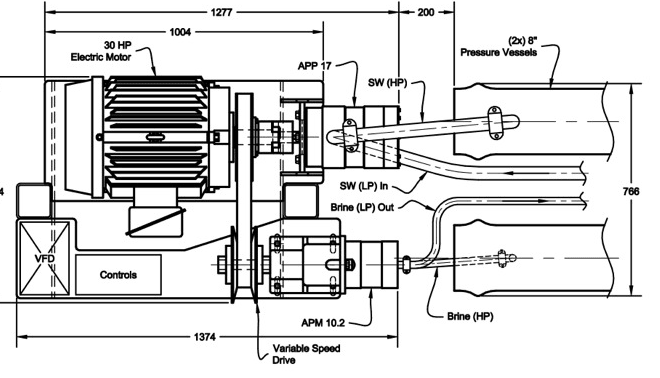
Calculated from the proposed module
A plant adjustable in approximately 22 kW steps
The paper envisioned plants containing 5-500 independently controlled modules. Every additional module would add or remove about 22 kW of load.
5 modules 110 kW
50 modules 1.1 MW
100 modules 2.2 MW
250 modules 5.5 MW
500 modules 11 MW
The grid problem
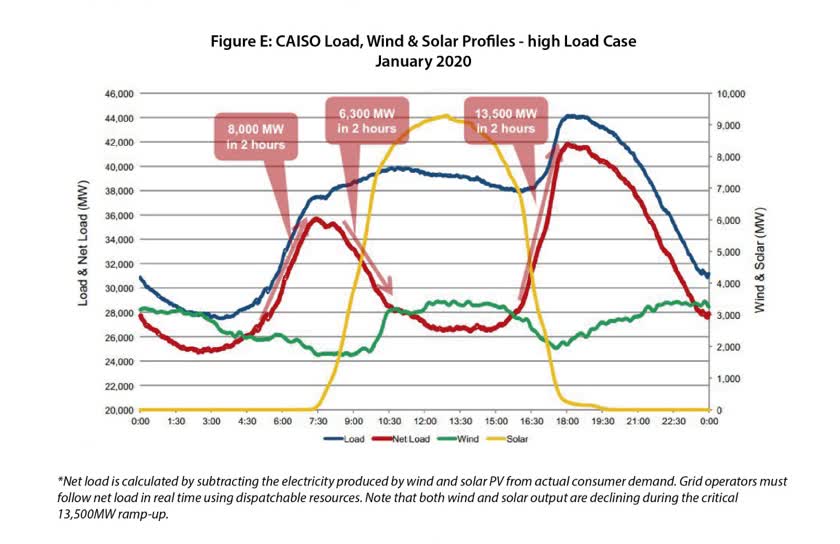
Load, net load, wind and solar do not move together
The paper used this CAISO simulation to show the steep ramps a high-renewable grid must follow. It does not claim that desalination output traces an invented hourly curve.
Power inexpensive or surplusMore modules operate
Power expensive or constrainedFewer modules operate
Water demand continuesStored permeate supplies it
How it works
- Many small, fully integrated modules replace a single large pressure center
- The number of operating modules can respond to energy price and grid conditions
- Stored permeate separates water delivery from the timing of water production
- The paper analyzes potential demand-response and grid-balancing uses